stopslouching
The catalog

Eleven stretches.
Better posture. Sharper jawline. More presence.

All chair-based. No equipment, no doorways, no getting on the floor. StopSlouching auto-prescribes the right one when you slouch — this page is the full menu and what each one fixes.

Reference photo: Neck rolls

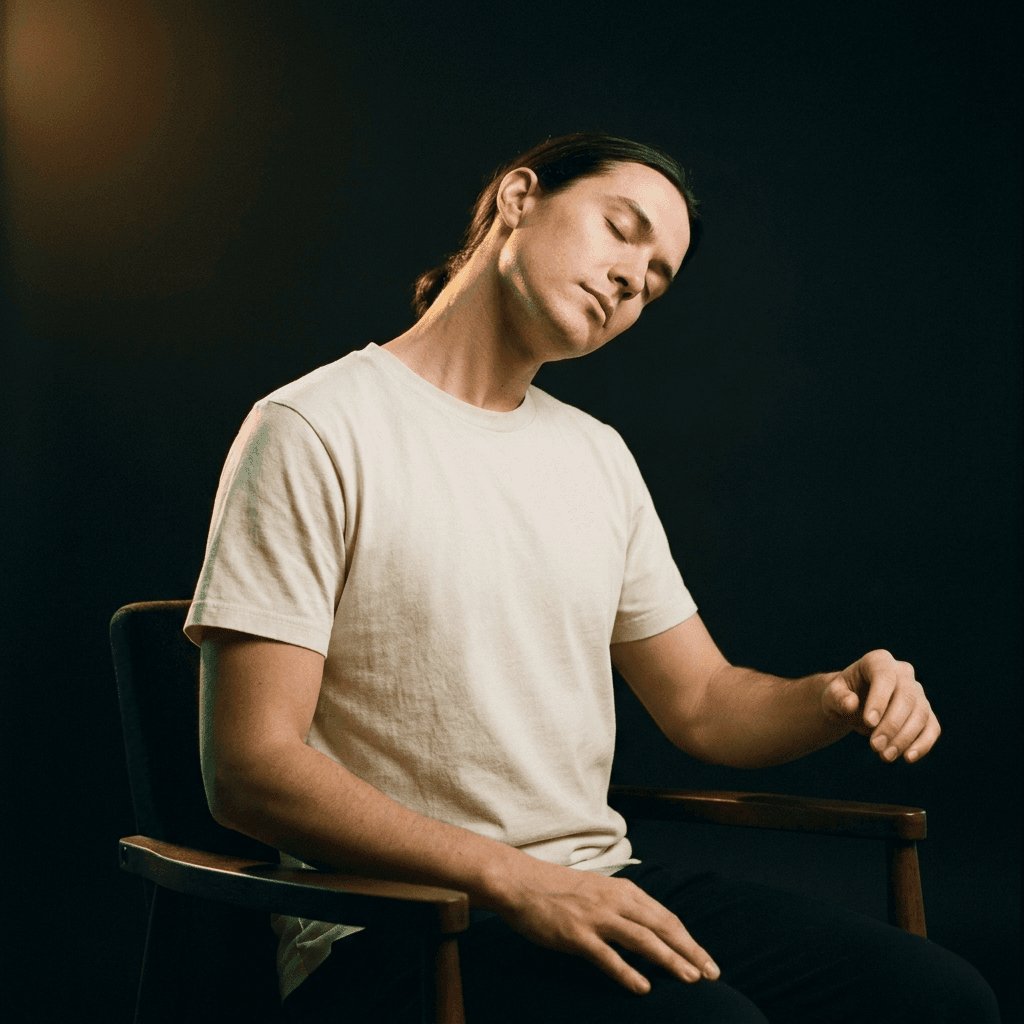
Neck rolls

30s
neck
  1. 1.Sit tall, shoulders relaxed.
  2. 2.Drop your chin toward your chest.
  3. 3.Slowly roll your head ear-to-shoulder, back, and to the other side.
  4. 4.Reverse direction halfway through.
Reference photo: Chin tucks

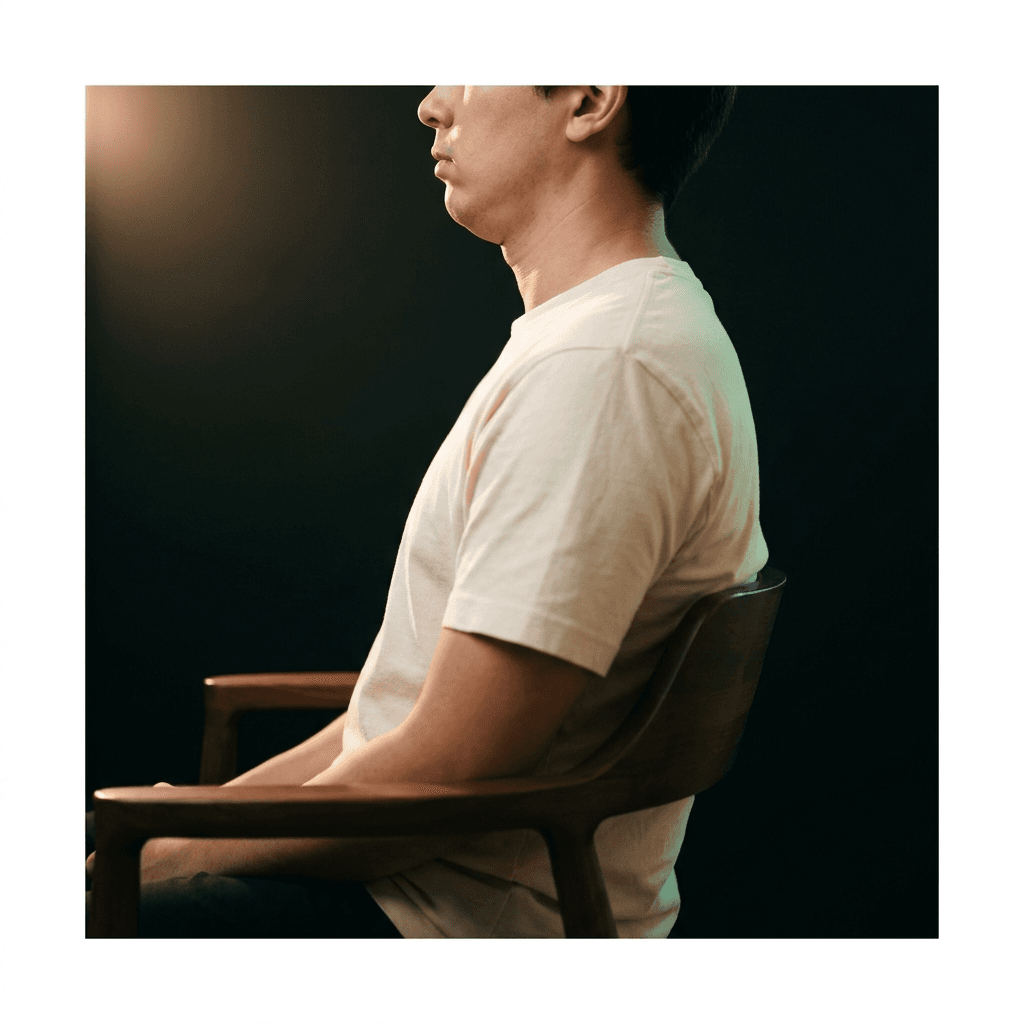
Chin tucks

30s
neck
  1. 1.Sit tall, look straight ahead.
  2. 2.Gently pull your chin straight back (you'll feel a double-chin).
  3. 3.Hold 5 seconds. Release.
  4. 4.Repeat 5 times.
Reference photo: Upper trap stretch

Upper trap stretch

30s
neckshoulders
  1. 1.Sit tall. Drop your right ear toward your right shoulder.
  2. 2.Place your right hand gently on top of your head — let its weight do the work.
  3. 3.Hold 15 seconds.
  4. 4.Switch sides.
Reference photo: Levator scapulae stretch

Levator scapulae stretch

40s
neck
  1. 1.Turn your head 45° to the right.
  2. 2.Tuck your chin toward your right collarbone.
  3. 3.Place your right hand on the back of your head, gentle pull.
  4. 4.Hold 20 seconds. Switch sides.
Reference photo: Shoulder rolls

Shoulder rolls

30s
shoulders
  1. 1.Roll both shoulders backward in big, slow circles. 10 reps.
  2. 2.Then forward. 10 reps.
  3. 3.Keep arms relaxed at your sides.
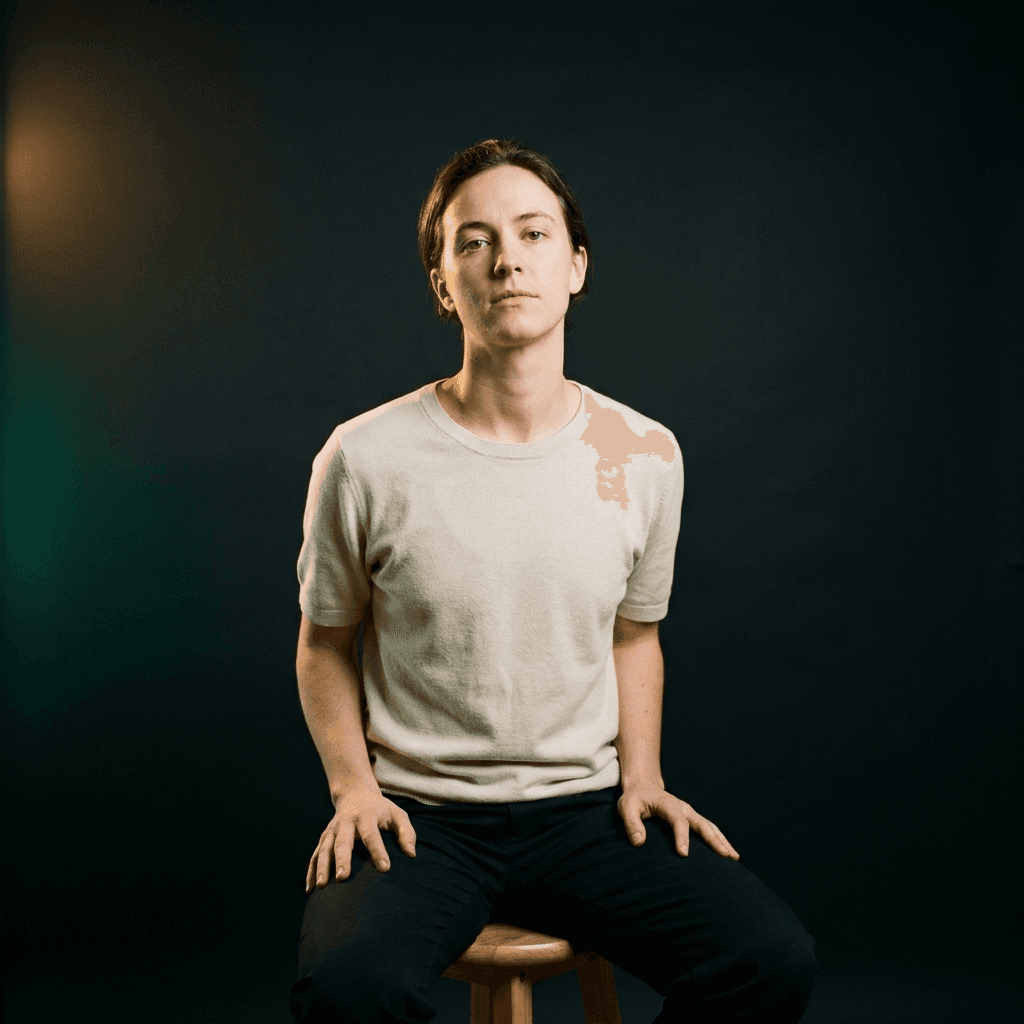
Reference photo: Shoulder-blade squeeze

Shoulder-blade squeeze

30s
shouldersback
  1. 1.Sit tall. Pull your shoulder blades down and together.
  2. 2.Imagine pinching a pencil between them.
  3. 3.Hold 5 seconds. Release.
  4. 4.Repeat 6 times.
Reference photo: Hands-behind-head chest opener

Hands-behind-head chest opener

30s
chestshoulders
  1. 1.Interlace your fingers behind your head.
  2. 2.Gently pull your elbows back, opening your chest.
  3. 3.Keep your chin tucked — don't crane your neck.
  4. 4.Hold 20 seconds.
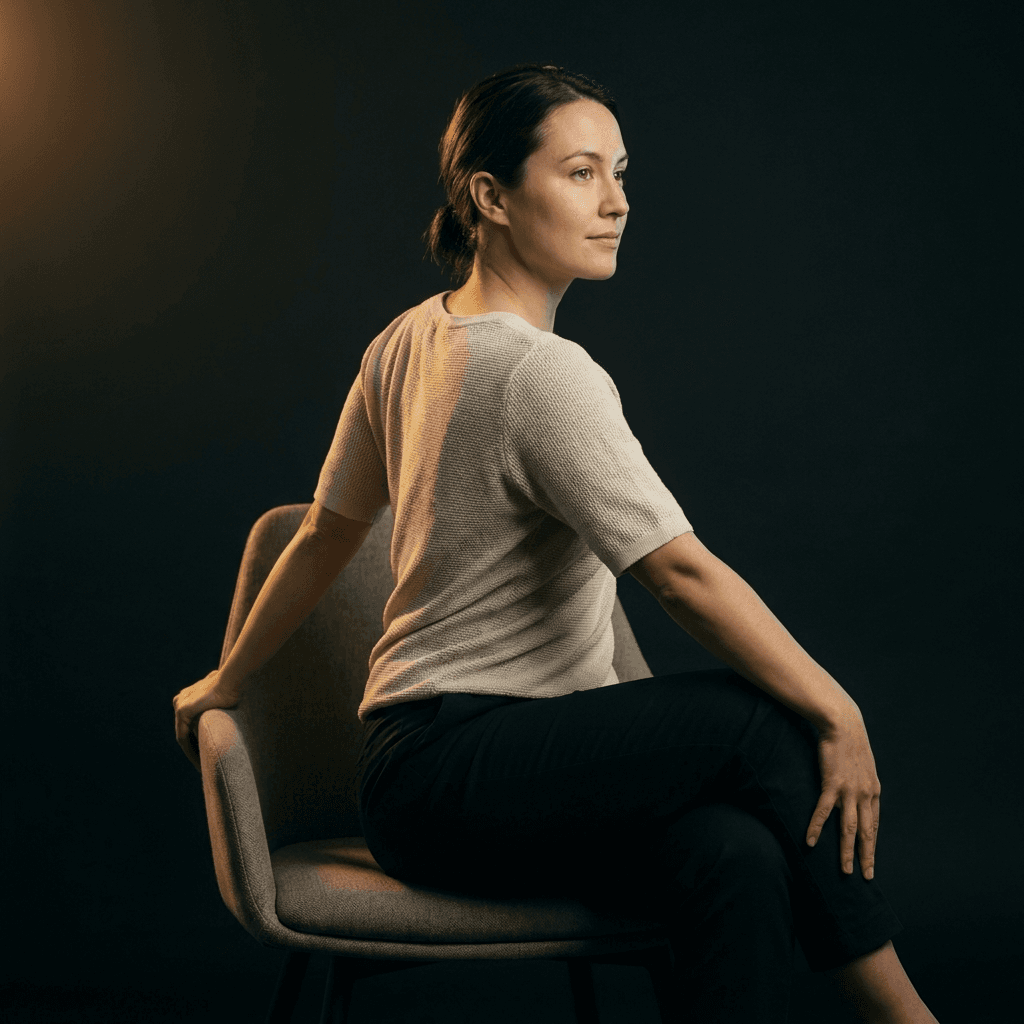
Reference photo: Seated spinal twist

Seated spinal twist

40s
back
  1. 1.Sit tall, feet flat on the floor.
  2. 2.Place your right hand on the back of your chair, left hand on your right knee.
  3. 3.Twist gently to the right, looking over your shoulder.
  4. 4.Hold 15 seconds. Switch sides.
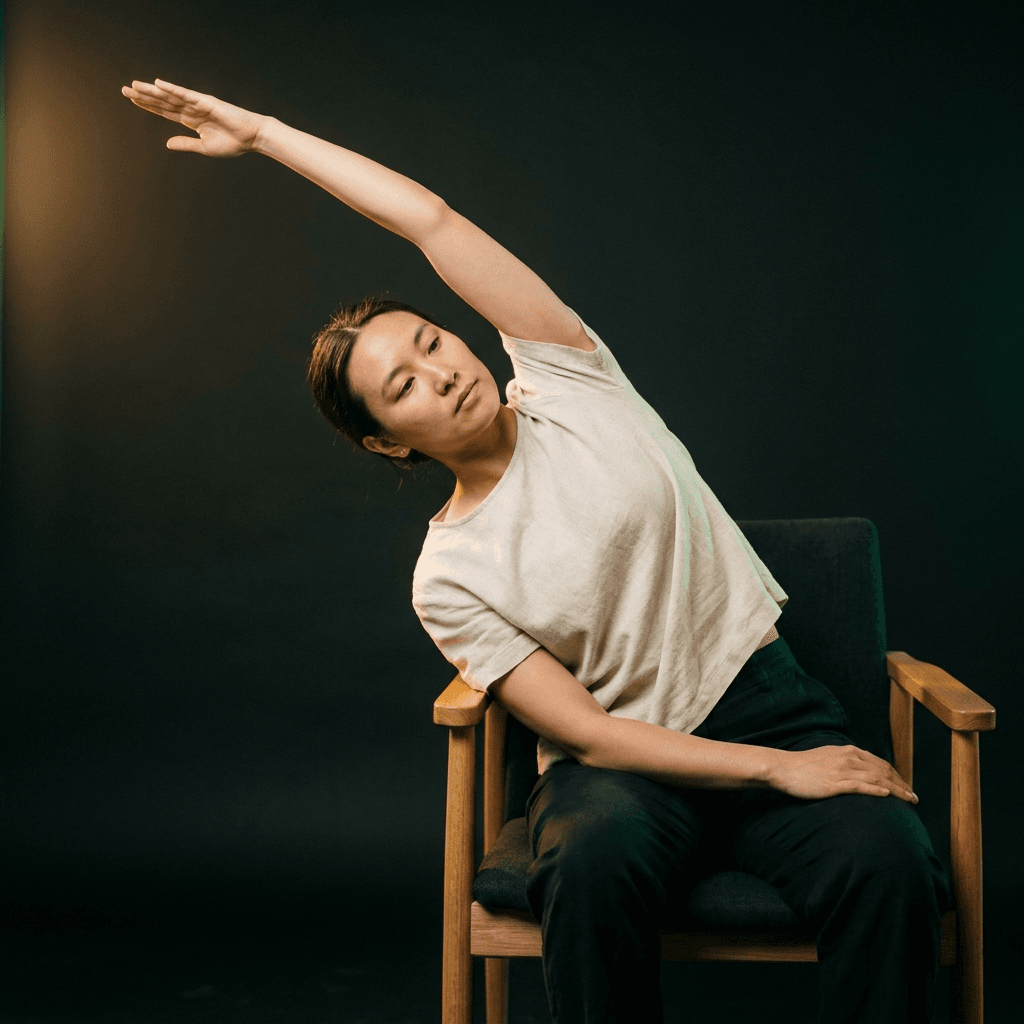
Reference photo: Seated side bend

Seated side bend

30s
back
  1. 1.Sit tall. Raise your right arm overhead.
  2. 2.Lean left from the waist — feel the stretch down your right side.
  3. 3.Hold 15 seconds. Switch sides.
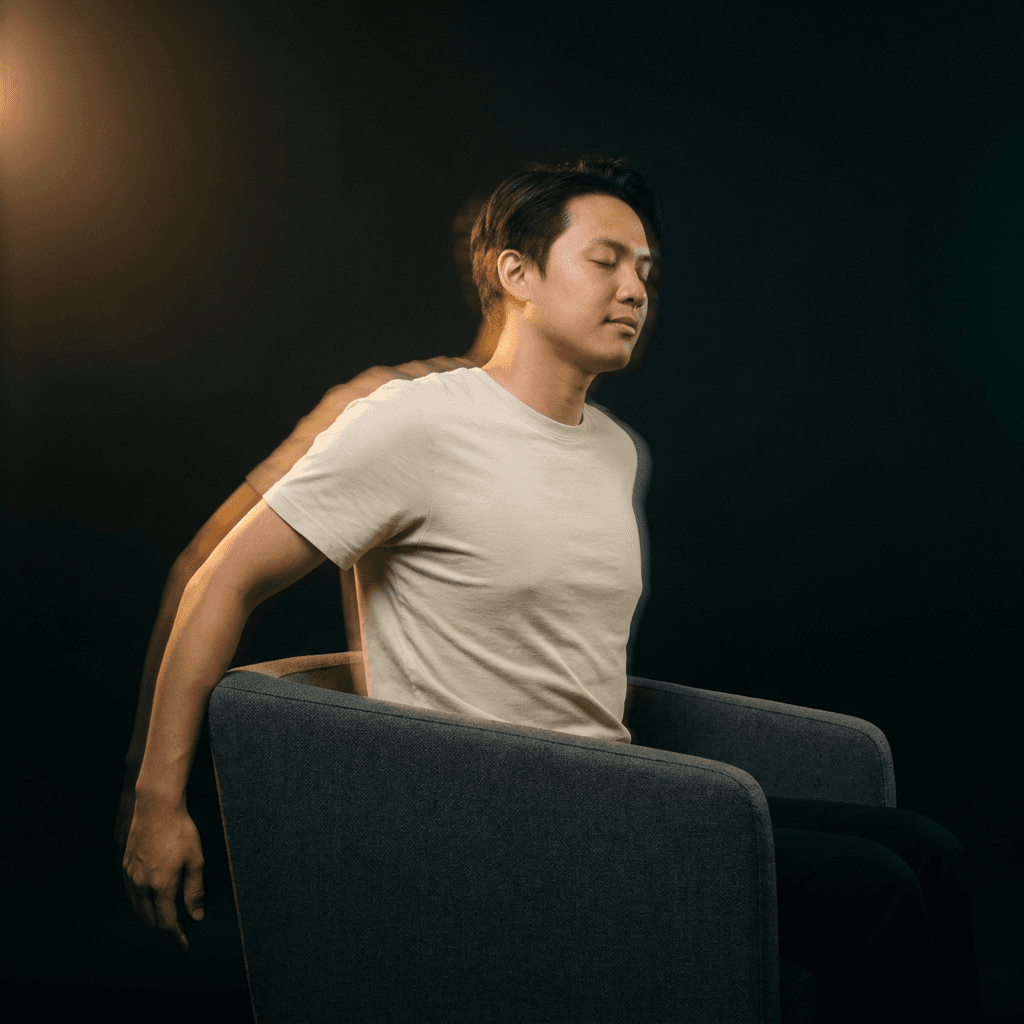
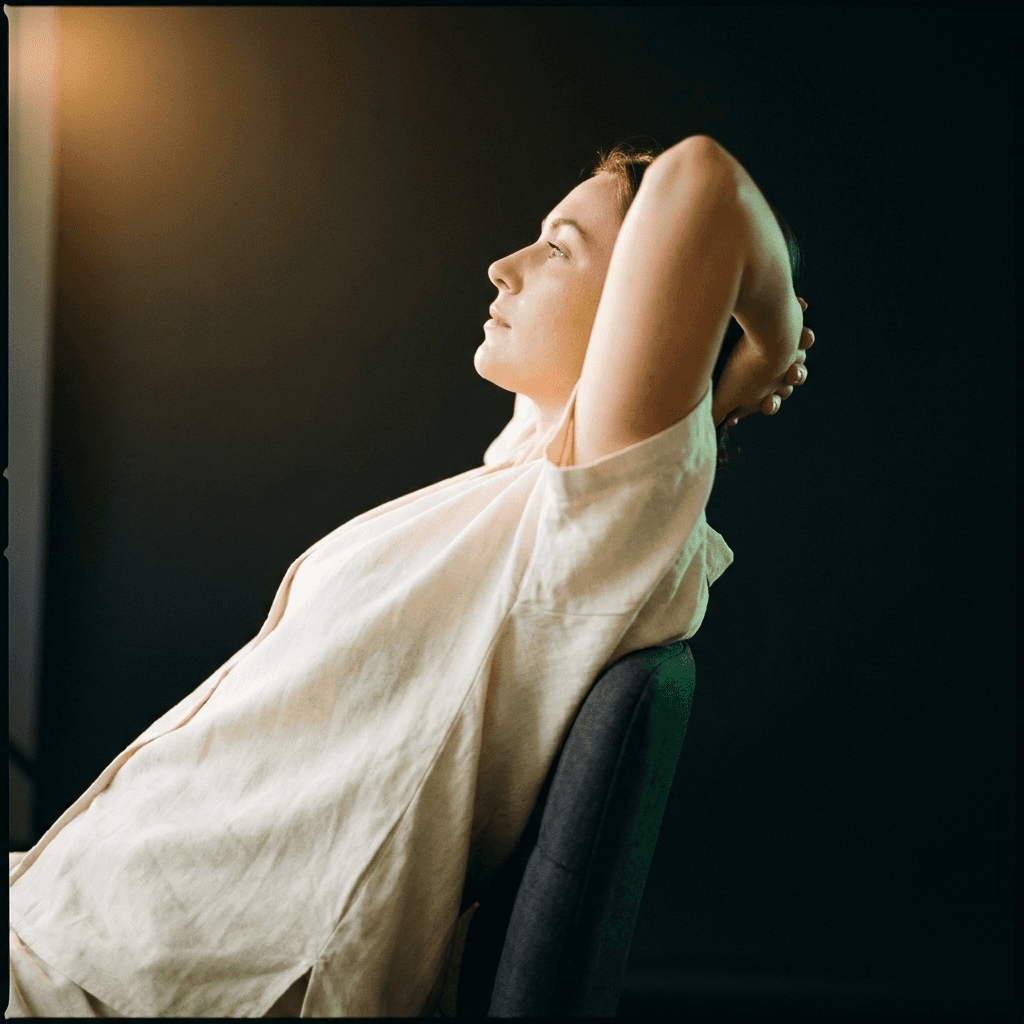
Reference photo: Chair-back thoracic extension

Chair-back thoracic extension

30s
backchest
  1. 1.Sit in your chair. Interlace fingers behind your head.
  2. 2.Lean your upper back over the top of the chair, gently arching.
  3. 3.Hold 10 seconds. Repeat 3 times.
Reference photo: Eye break

Eye break

20s
eyes
  1. 1.Look away from your screen.
  2. 2.Focus on something at least 20 feet away.
  3. 3.Hold for 20 seconds.
  4. 4.Blink a few times. Resume.
The connection

Posture changes how you look, not just how you feel.

Short version, no fluff:

Neck & jawline

Chronic forward-head posture shortens the suboccipital muscles and lengthens the deep neck flexors — that double-chin look isn't only fat, it's structural. Daily neck stretches plus chin tucks rebuild the muscle balance that holds your head over your shoulders. Visible result: longer-looking neck, sharper jawline.

Shoulders & chest

Hours of mouse-and-keyboard pull the shoulders into internal rotation. Pec stretches and scapular squeezes counter the pull, letting the chest open and the shoulders sit back. Visible result: broader chest, less hunched silhouette.

Spine & breathing

A rounded thoracic spine compresses the diaphragm. Stretches that extend the upper back — chair-back extension, seated twist — restore vertical alignment, which also improves lung capacity and voice projection.

Eyes

Screen fatigue makes your face squint and your head jut forward to focus. The 20-20-20 rule resets the ciliary muscles and disrupts the slouch-toward-screen reflex.

The compounding part.

Three 30-second stretch breaks a day = ~30 minutes of corrective work a week. Eight weeks of that and you look different. The detection part is what makes it stick — you don't have to remember.

Open the app